
Oversight and access
Over-the-counter glucose sensors changed who can buy a diagnostic
A device class built for diabetes management is now a pharmacy purchase for people with no diagnosis. The clearance covers the sensor, not the interpretation.
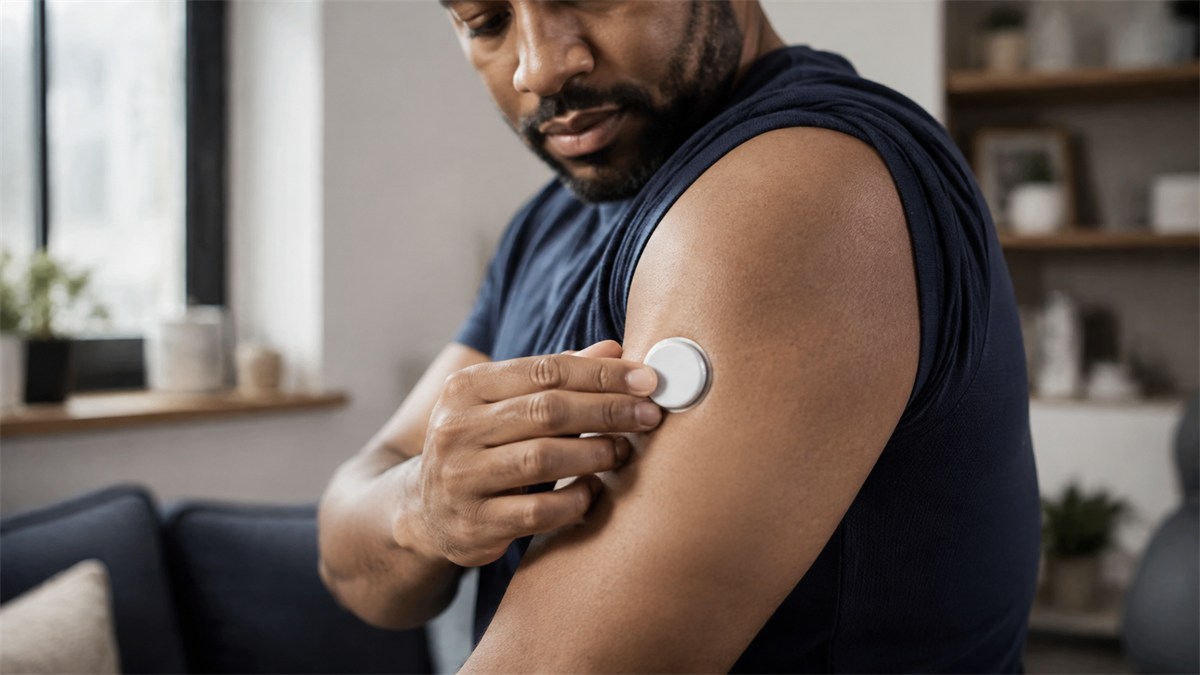
The arrival of over-the-counter continuous glucose monitors was a genuine regulatory milestone. It also created a category the clearance framework does not really address: the software that tells you what your glucose data means.
The short version
- The Dexcom Stelo was the first continuous glucose monitor cleared for over-the-counter sale in the United States, built on an established prescription platform.
- Sensors typically last around 15 days and report every few minutes.
- One CGM platform received clearance specifically for weight management in 2025, which is a narrower permission than general wellness marketing implies.
- Clearance applies to the measuring device. The scores and recommendations layered on top are largely outside that review.
What was actually cleared
The regulatory decision concerned a sensor and its accompanying application: whether the device measures interstitial glucose accurately enough, and whether a lay user can apply and use it safely without a clinician. Both are reasonable questions and the answer was yes.
The scale involved is substantial. Abbott has said more than six million people across sixty-plus countries use its continuous glucose technology, which puts the consumer expansion in context.
Where the framework thins out
Between the raw sensor reading and the user sits an interpretation layer: a metabolic score, a food rating, a recommendation about when to eat. These algorithms are proprietary, differ between platforms, and are generally not subject to the same review as the measuring device.
That is where most of the behavioural influence happens. A user acts on the score, not on the millimoles. One platform received clearance specifically for weight management, which is a defined indication; general wellness scoring typically has no equivalent.
What this means practically
Trust the sensor. Treat the score as a product opinion. If two platforms using the same underlying sensor give you different metabolic ratings, that difference is a difference in commercial modelling, not in your physiology.
And note the boundary the clearance draws. These devices are not cleared to diagnose diabetes and are not for insulin dosing decisions. If your data worries you, the next step is a clinician and a validated blood assay.
Common questions
Can an OTC sensor diagnose diabetes?
No. Diagnosis uses specific validated blood tests. These devices are explicitly not cleared for that purpose.
Are the non-invasive glucose devices any good yet?
Current non-invasive sensors track relative trends less accurately than needle-based CGMs and are not suitable for clinical decisions.
Sources
- Wearable health tech trends 2026 — https://haznos.org/2026/wearable-health-tech-trends-2026/
- Best CGMs for non-diabetics, athletes and biohackers — https://outliyr.com/best-cgms-healthy-biohackers
- Best biohacking products in 2026 — https://www.mindlabpro.com/blogs/nootropics/biohacking-products